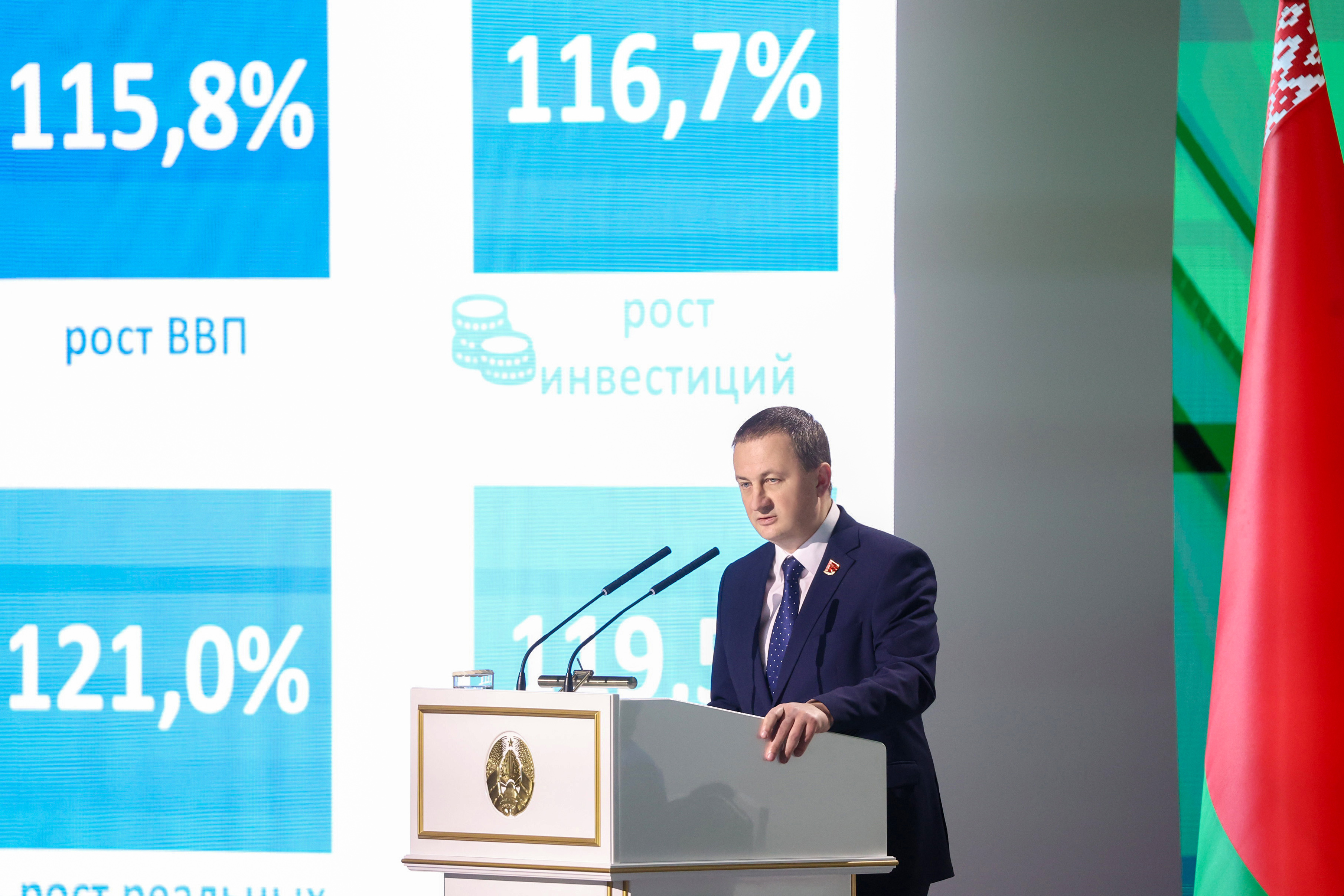
Belarus’ social and economic development program for 2026-2030 puts forward seven priorities, Belarusian Prime Minister Aleksandr Turchin said during the session of the Belarusian People’s Congress as he presented Belarus’ social and economic development program for 2026-2030 on 19 December.
“The first priority is national demographic security, i.e. preserving the population, strengthening the nation’s health, and supporting the family. The second is developing human capital, ensuring quality education, and nurturing a harmonious and patriotic individual. The third is creating a high-quality and comfortable living environment,” Aleksandr Turchin said.
The fourth priority outlined in the program is boosting competitiveness, accelerating technological development, and pursuing digital transformation. The fifth is strong regions, the sixth is strengthening the state’s defense capability and developing the defense sector of the economy, and the seventh is developing tourism potential.
Senior government officials have been appointed as curators for each program priority, with ministers and heads of oblast executive committees personally accountable for individual tasks.
“The new program is based on the results of a large-scale sociological study of society’s demands and expectations in the medium term, conducted by the BISR. A nationwide dialogue called Image of the Future was organized under the auspices of the People’s Five-Year Plan project. The level of public engagement is unprecedented - over 70,000 people. Our citizens expect the state to pursue a people-centered policy and address practical issues: the quality of education and healthcare, upgrading infrastructure, fixing roads, and preventing price hikes. Crucially, it’s about the realistic implementation of these commitments,” the prime minister said.
According to him, the program has been finalized taking into account questions received from Belarusian People’s Congress delegates. A clear mechanism for its implementation has been established. This includes 20 state programs of a social and economic nature, 17 sectoral programs, seven regional programs, and 38 scientific programs.